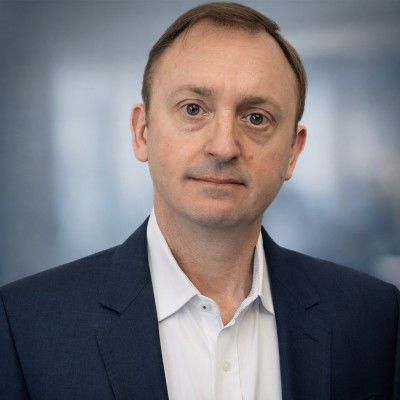
Andrew Houck
Andrew A. Houck (born 20 June 1979) is an American physicist and quantum information scientist and is the Anthony H.P. Lee ’79 P11 P14 Professor of Electrical and Computer Engineering atPrinceton University. He currently serves as Dean of Princeton’s School of Engineering and Applied Science and is also an associated faculty member in physics. He is a fellow of the Princeton Center for Theoretical Science and a Fellow of the American Physical Society. Andrew was the inaugural co-director of the Princeton Quantum Initiative and previously directed the Co-design Center for Quantum Advantage, a national quantum research centre funded by the US Department of Energy.
Andrew grew up in Colts Neck, New Jersey. He studied electrical engineering at Princeton University, where he was valedictorian of the undergraduate Class of 2000. He later completed his PhD in physics atHarvard Universityin 2005. After his doctorate, he carried out postdoctoral research at Yale University in the laboratory of Robert Schoelkopf.
His research focuses on superconducting electronic circuits for quantum computing and quantum simulation. He is a pioneer of circuit quantum electrodynamics (cQED), a system in which superconducting qubits are strongly coupled to on-chip microwave resonators. In these systems, quantum bits can absorb and emit single microwave photons many times, allowing detailed study and control of quantum behaviour. This work combines quantum mechanics, superconducting electronics, microwave engineering, quantum optics and low-temperature measurement.
AtYale University, Andrew was part of the team that developed the transmon qubit, a design that greatly reduces sensitivity to charge noise and is now widely used in leading quantum computing platforms. He later helped redesign the transmon using tantalum, improving qubit coherence. His group at Princeton studies how to build scalable and robust quantum architectures, addressing challenges such as decoherence, noise, wiring complexity and system integration.
Andrew also works in quantum and non-linear optics using microwave photons, where strong non-linear effects allow access to regimes not easily reached in traditional optical systems. In 2019, his group demonstrated a microchip that simulates particle interactions in a hyperbolic lattice, opening new paths for studying many-body quantum physics.
Alongside his research, Andrew is a committed educator and mentor. He led the creation of Princeton’s first-year engineering curriculum and has advised government and industry on quantum technology strategy. His honours include the Presidential Early Career Award for Scientists and Engineers, the NSF CAREER Award, the Packard Fellowship, the Sloan Research Fellowship, and recognition byMITTechnology Review’s TR35.